How to Stop Lettuce From Bolting in Hot Weather
Lettuce bolts because it thinks summer is telling it to make seed, not salad. If you’re asking “How do I keep lettuce from bolting in heat?”, the honest answer is a mix of variety choice, root-zone cooling, and timing, not a single trick. Once the central stalk shoots up, you’ve got days to salvage flavor.
Per University of California Cooperative Extension guidance, lettuce shifts toward flowering when soil temperatures push past 75°F (24°C) and daylight stretches beyond 14 hours. As of 2026, most home-grower failures still come down to planting spring cultivars into July heat. Here’s how to read your situation and fix it before bitterness sets in.

Quick Answer
Keep lettuce from bolting in heat by planting bolt-resistant varieties like Jericho or Muir. Sow into cool soil under 70°F. Add 40% to 50% shade cloth over afternoon sun.
Mulch the root zone with straw. Water deeply in the early morning. Harvest young using cut-and-come-again.
Succession sow every two to three weeks.
Why Lettuce Bolts the Second Summer Hits
Lettuce is a cool-season crop. Its life cycle is programmed to finish before summer, not survive it. When heat and long days combine, the plant flips from leaf production to reproductive mode.
Two signals do the actual work:
- Soil temperature climbing past 75°F (24°C) at root depth
- Daylight stretching past 14 hours (the long-day cue)
Once both signals fire, the growing point elongates into a seed stalk. Latex builds up in the leaves. That’s what turns them milky and bitter.
No amount of watering reverses the flip. Prevention beats rescue every single time.
The Fastest Way to Tell If Your Lettuce Is About to Bolt
Look at the center of the plant. The moment the crown starts stretching upward into a taller, cone-shaped growing tip, bolting is underway. Leaves near the top narrow, and new growth loses its cup shape.
Three early tells our research consistently sees flagged in extension bulletins:
- Center leaves stand more vertical than horizontal
- New growth feels stiffer along the midrib
- A slightly bitter aftertaste on a raw leaf
Catch these signs within 24 to 48 hours and you can still harvest sweet leaves. Wait longer and the plant commits fully to seed.
Diagnose Your Situation Before You Try to Fix It
The right move depends entirely on where you are in the growing cycle. Skip the diagnosis and you’ll waste time on the wrong fix. Run through these three checks before touching a hose or shade cloth.
What’s the soil temperature right now?
A soil thermometer at 4 inches deep gives you the number that matters. Under 70°F (21°C) means you have time. Between 70°F and 75°F means act today.
Above 75°F (24°C), the trigger has already fired for most spring varieties.
Has the seed stalk already started shooting up?
If the central growing point looks stretched, bolting has begun. You cannot reverse it. Focus on harvesting fast and replacing with heat-tolerant varieties.
If the plant still looks rosette-flat, prevention still works.
Which variety did you plant?
Check the seed packet. Spring butterheads and crispheads like Buttercrunch or Great Lakes bolt earliest. Summer-bred cultivars (Jericho, Muir, Nevada) tolerate weeks more heat.
Knowing your variety tells you how aggressive your intervention needs to be.
The Real Trigger: Soil Temperature and Day Length (Not Just Heat)
Most guides blame “the heat.” That’s only half the story. Lettuce reads two environmental cues before committing to bolt.
The first is soil temperature at root depth. Research published by the USDA Agricultural Research Service pegs the bolting threshold at roughly 75°F (24°C) sustained in the top few inches of soil. The second is photoperiod.
Once daylight passes 14 hours, long-day varieties get the reproductive signal.
Here’s the practical part. You can drop air temperature with shade cloth. But if your soil stays warm overnight, or your latitude gives you 15+ hours of daylight in June, the plant still bolts.
Root-zone cooling and variety choice do far more work than shade alone.
| Trigger | Threshold | Why It Matters |
|---|---|---|
| Soil temperature | Above 75°F (24°C) | Fires bolting signal at the roots |
| Air temperature | Sustained above 80°F (27°C) | Adds heat stress and bitterness |
| Day length | Over 14 hours | Long-day reproductive cue |
| Transplant shock | Any time | Locks in bolting weeks early |
That’s why the same variety can bolt in Georgia in May and hold fine in coastal Maine through July.
Bolt-Resistant Lettuce Varieties Worth Planting for Summer
Variety choice is the single biggest lever you have. A spring butterhead in July soil will bolt no matter what you do. A summer-bred cultivar holds for weeks past the point where standard types fail.
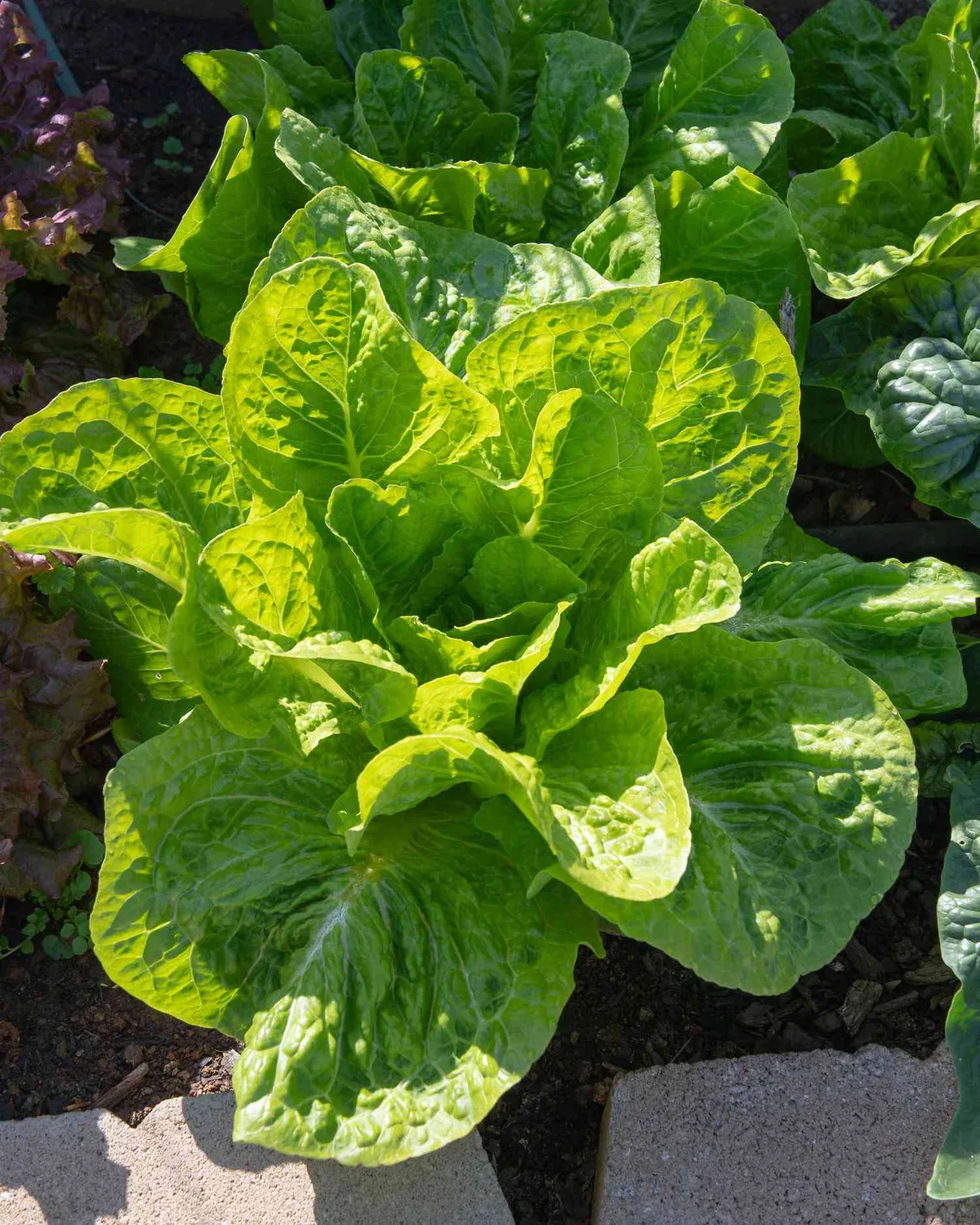
Aggregate university trial data and extension reports consistently rank these as the top summer performers:
- Jericho (romaine): Bred in Israeli desert conditions, holds sweet flavor above 85°F
- Muir (summer crisp): One of the most heat-tolerant green leaf varieties available
- Nevada (batavian): Handles heat and light frost, a dual-season workhorse
- Coastal Star (romaine): Slow-bolt pick popular with organic growers
- Cherokee (red summer crisp): Adds color and resists tip burn in heat
- Sierra (batavian): Classic summer variety with reliable bolt resistance
- Adriana (butterhead): Holds head form longer than most butterheads in warmth
- Slobolt (looseleaf): Standby for warm regions, name says it all
Guidance from the Cornell University Cooperative Extension flags Jericho and Muir as the most reliable options above 85°F. Mainstream seed-company trials confirm the same pattern.
If you only plant two summer varieties, make it Jericho for romaine and Muir for leaf. That combination alone extends your salad window by six to eight weeks in Zones 7 and warmer.
Your Decision Tree: What to Do Based on Growth Stage
Growth stage decides which fix actually works. A seedling response looks nothing like a mid-growth response. Match the intervention to the plant’s age or you waste both time and seed.
If seedlings are under 3 weeks old
Move fast on placement, not variety. Shift containers to a spot that gets morning sun only. In beds, install shade cloth before soil temperatures cross 70°F (21°C).
Water at soil level with a rose head to avoid heat-shocking tender roots.
If plants are mid-growth (4 to 6 weeks in)
This is the danger window. Apply 40% to 50% shade cloth over afternoon exposure and mulch the root zone with two inches of straw. Deep water at dawn every second day.
Start harvesting outer leaves to slow the plant’s rush toward flowering.
If the flower stalk has already emerged
Stop trying to save it. Harvest every usable leaf within 48 hours before bitterness locks in. Pull the plant, refresh the soil, and drop in a bolt-resistant summer cultivar.
If you want free seed for next year, leave one plant to finish flowering and dry down.
Shade Cloth Strategy: Density, Placement, and Timing
Shade cloth cools the canopy and slows soil warming, but only if you match density to your climate. Too little shade wastes the effort. Too much starves the plant and produces soft, leggy leaves that wilt at the first stress.
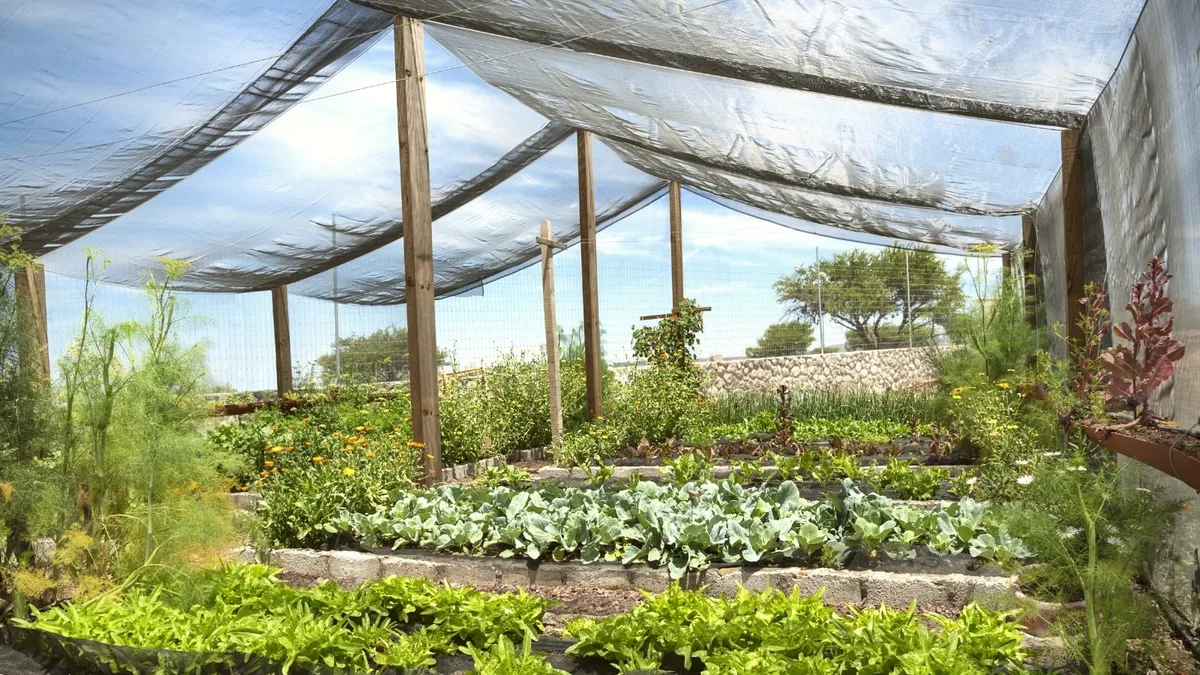
Use this quick reference for density selection:
| Climate | Shade Density | When to Install |
|---|---|---|
| Mild summer (Zones 3-6) | 30% | When air hits 80°F (27°C) |
| Warm summer (Zones 7-8) | 40% to 50% | When soil hits 70°F (21°C) |
| Hot summer (Zones 9-10) | 50% to 60% | Two weeks before last cool nights |
| Desert / tropical | 60% to 70% | At sowing |
Suspend the cloth 12 to 18 inches above the canopy so air can move underneath. Anchor the west and south edges first, since those catch the hottest afternoon light. In our research, growers who leave the north side open report cooler bed temperatures and less mildew than fully enclosed setups.
Peel the cloth back on cloudy days and cool mornings. Constant shade over cool-season crops encourages weak growth and slug pressure.
Watering and Mulching to Cool the Root Zone
Root-zone temperature drives bolting more than air temperature does. A well-mulched bed can stay 10°F to 15°F cooler at 4 inches deep than bare soil in the same afternoon sun. That single change often buys two extra weeks of harvest.
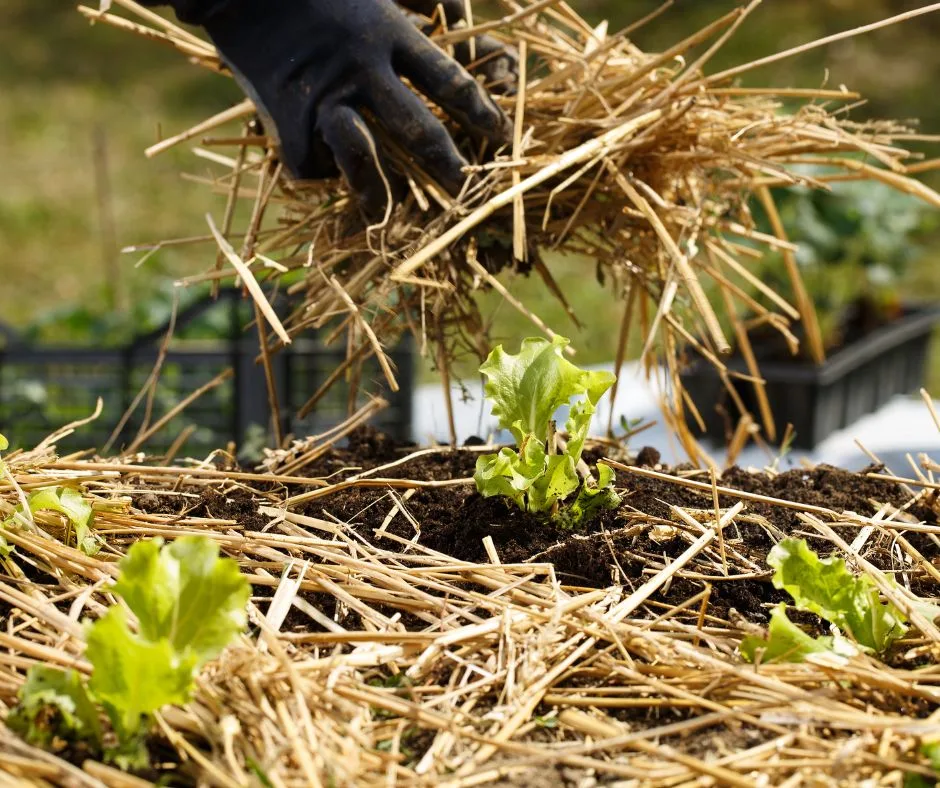
Water deeply, not often. One inch delivered slowly at dawn beats three light sprinklings at midday. Shallow watering trains roots to stay near the hot surface, which is exactly where you don’t want them.
Mulch checklist that consistently outperforms bare beds:
- Two inches of clean straw, not hay (hay carries seed)
- Keep mulch a finger’s width off the plant’s crown to prevent rot
- Top up when it thins below one inch
- Refresh after heavy rain, since matted mulch traps heat
Drip irrigation or soaker hoses beat overhead sprinklers for one simple reason. Wet leaves in afternoon sun scald, and overhead water at 3 p.m. shocks a plant that’s already near its heat threshold. If overhead is your only option, run it at 5 a.m.
Succession Planting Windows That Actually Beat the Heat
Succession planting only works if you time it to soil temperature, not the calendar. A rigid “every two weeks” schedule fails the moment your summer runs hot and dry. Track soil temp at 4 inches and sow when it sits between 55°F and 68°F (13°C to 20°C).
For most of the continental US, that means two productive sowing windows:
- Late winter through mid-spring, ending when soil crosses 70°F
- Late summer, once soil drops back under 70°F (typically mid-August in Zones 7 to 9)
For the hot midsummer gap, pre-chill seed for 48 hours in a damp paper towel in the fridge. This overrides thermodormancy, the built-in seed shutdown that stops germination above roughly 80°F (27°C). Sow the chilled seed into shaded, pre-watered beds at dusk.
Interval guidance our research keeps validating:
- Spring: sow every 14 days for continuous harvest
- Peak summer: sow every 10 days, expect losses
- Fall: sow every 14 days until 8 weeks before first frost
Skip a sowing during the hottest 10-day stretch. Losses that week almost always exceed harvests.
Interplanting and Microclimate Tricks From Market Gardeners
The best summer lettuce beds borrow shade from other crops. Market growers routinely plant loose-leaf varieties along the east side of tomato rows, pole beans, or trellised cucumbers. The taller crop blocks afternoon sun while lettuce roots stay cool underneath.
Simple pairings that work in most home gardens:
- Loose-leaf lettuce under determinate tomatoes at 24-inch spacing
- Buttercrunch along the north side of a cucumber trellis
- Romaine between rows of sweet corn once corn passes 3 feet tall
- Salad mix in the dappled shade of pole beans on a bamboo teepee
Container growers get the same effect by moving pots. Track the sun for one afternoon and mark the spots that lose direct light by 1 p.m. Rotate your lettuce pots into those zones once soil temperatures start climbing.
North-facing walls, fence lines, and the shady side of raised beds all count as microclimates. A bed that gets four hours of morning sun and full afternoon shade often outperforms an “ideal” full-sun bed once July hits.
Heat-Tolerant Alternatives When Lettuce Just Won’t Cooperate
Some summers, no variety or shade setup holds. Instead of fighting the season, swap lettuce for greens that actually thrive in heat. You keep the salad bowl full without the bitterness.
Reliable warm-season stand-ins:
- Malabar spinach: Vining tropical green, mild flavor, thrives above 90°F
- New Zealand spinach: Salt tolerant, drought hardy, harvests all summer
- Swiss chard: Bolt slow, keeps producing into fall, tolerates 95°F
- Orach: Nutty flavor, comes in red or green, bolt resistant into July
- Amaranth greens: Fast growing, cut-and-come-again in extreme heat
- Sorrel: Perennial lemony green, thrives in partial shade
Mix two or three of these into a summer salad bed and rotate lettuce back in once soil drops under 68°F (20°C). University extension trials note a clear pattern. Malabar spinach and Swiss chard produce more usable leaf per square foot in July than any lettuce variety.
Mistakes That Lock in Bolting Weeks Before You See It
Bolting is often triggered long before the seed stalk appears. These are the errors our research most often finds behind an unexpectedly early bolt.
- Transplanting root-bound seedlings into warm soil (stress signals maturity)
- Skipping harden-off before setting plants outside
- Planting spring cultivars in June or July
- Deep midday watering that heat-shocks the crown
- Fertilizing with high-nitrogen feed after week four
- Letting weeds compete for water at the shallow root zone
- Overcrowding, which raises humidity and canopy temperature
- Ignoring soil temperature and trusting the calendar instead
Two more traps worth calling out. Reusing potting mix that’s held heat all day cooks new seedling roots. And overhead watering with cold hose water on a hot afternoon triggers the same stress response as a sudden heat spike.
Harvesting a Bolting Plant Before It Turns Bitter
Once you spot the stalk, harvest inside 48 hours. Latex builds fast, and once leaves turn milky at the cut, the flavor is gone. Cut in the cool morning when sugars are highest.
Salvage steps that consistently work:
- Cut the whole plant at the base rather than picking leaves
- Rinse cut leaves in ice water for 15 minutes to firm them up
- Trim any leaf with visible white sap at the stem
- Store in a sealed container with a dry paper towel
If the stalk is under 4 inches, outer leaves usually stay sweet. Above 6 inches, expect noticeable bitterness across the whole head. A quick taste test on one leaf before you harvest the row saves you an unpleasant salad.
Quick-Reference Decision Guide for Summer Lettuce
Use this as your at-a-glance summer playbook. It condenses everything above into one scan.
| Situation | First Move | Backup Plan |
|---|---|---|
| Soil under 70°F, no stalk | Sow succession, mulch beds | Add 30% shade cloth |
| Soil 70-75°F, plants healthy | Install 40% to 50% shade cloth | Deep dawn watering |
| Soil above 75°F, no stalk yet | Mulch heavy, harvest outer leaves | Prep for replant |
| Stalk under 4 inches | Harvest whole plant in 48 hours | Replace with Jericho or Muir |
| Stalk above 6 inches | Pull the plant | Sow Malabar spinach or chard |
| Peak midsummer gap | Pre-chill seed 48 hours | Wait for August sow window |
Match your row to a line, act on the first move, and keep the backup ready if the trigger has already fired.
Frequently Asked Questions
Can I reverse bolting once the stalk appears?
No. Once the flower stalk emerges, the plant has committed hormonally to seed production. Cutting the stalk won’t restart leaf growth.
Focus on harvesting sweet leaves in the next 48 hours, then replace the plant with a bolt-resistant variety like Jericho, Muir, or Nevada for the rest of summer.
Does full afternoon shade stop lettuce from bolting?
Shade helps, but it isn’t a full solution. Bolting responds to soil temperature and daylight length together, and shade cloth only addresses air heat. Pair 40% to 50% shade cloth with two inches of straw mulch and a bolt-resistant cultivar.
That combination handles all three triggers, not just one.
What’s the highest temperature lettuce can handle?
Heat-tolerant varieties like Jericho and Muir hold leaf quality up to about 85°F to 90°F (29°C to 32°C) when soil is mulched and shaded. Standard spring types start bolting near 75°F (24°C) soil. Above 95°F air with no shade, expect losses across every cultivar within a week.
Should I water lettuce more often during heat waves?
Water deeper, not more often. A single dawn irrigation delivering one inch beats three shallow midday soakings. Shallow watering keeps roots near hot surface soil where they suffer most.
Deep morning water paired with mulch keeps the root zone under the 75°F bolting threshold.
When should I start summer succession sowings?
Time sowings by soil temperature, not the calendar. Sow when soil at 4 inches sits between 55°F and 68°F (13°C to 20°C). In Zones 7 to 9, that usually means late winter through mid-May, then again from mid-August into fall.
Pre-chill seed for 48 hours to override thermodormancy for midsummer sowings.
Are hydroponic systems better for summer lettuce?
Often, yes. Kratky and deep water culture systems keep root zones far cooler than in-ground beds when you shade the reservoir and top up with cool water. Aggregate grower reports show hydroponic lettuce holds through summer with less bolting than field-grown crops, provided nutrient solution temperatures stay under 72°F (22°C).

Similar Posts