Why Garden Hoses Collapse When Connected to a Pump
Why does a garden hose collapse when a pump draws water through it? A standard garden hose isn't built to handle the vacuum created on the suction side of a pump. Atmospheric pressure pushes inward on the flexible walls while internal pressure drops, and thin vinyl simply folds shut under that force.
Manufacturer specifications confirm that unreinforced hoses lack the structural stiffness needed to resist negative pressure.
Here's what you need to know before your next pump job goes wrong. We'll walk through the physics, the right equipment choices, and how to set things up so your hose stays open and your pump keeps flowing.
Quick Answer
Why does a garden hose collapse when a pump draws water through it? The pump creates low pressure inside the hose. Atmospheric pressure outside is still pushing at about 14.7 pounds per square inch.
Without enough internal support, that outside force crushes the thin walls inward.
Why It Happens: The Visual Mechanism of Hose Collapse
What actually happens inside the hose when water starts moving? The pump pulls fluid toward its intake, and that pulls the water already sitting inside the connected hose. As water accelerates through a narrow passage, the pressure inside the hose drops.
If the drop gets steep enough, the pressure differential across the wall becomes severe.

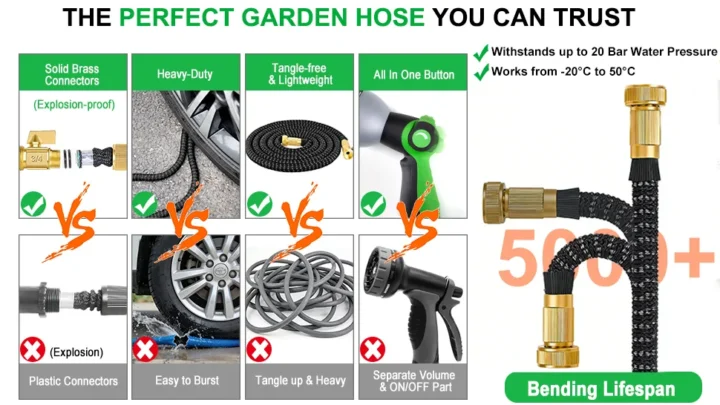
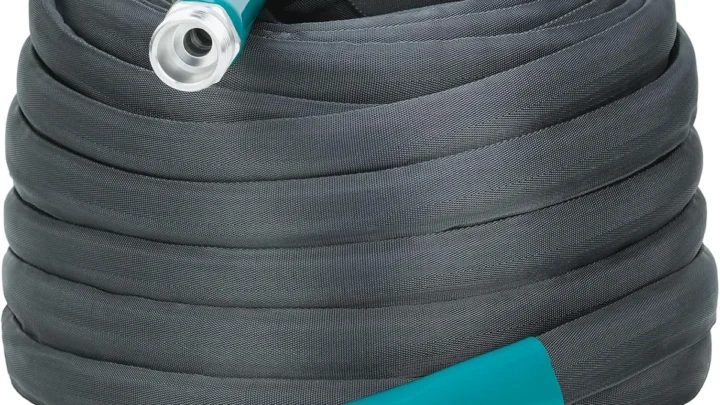
Image source: Web (Bing) / u-buy.com.au (Web image (fair-use with source credit))
Think about drinking through a flexible straw. The faster you suck, the more the straw walls cave in. A garden hose works the same way, except the pressure difference is measured in pounds per square inch rather than your lung power.
Standard vinyl hoses can handle positive pressure just fine. That's the pressure you feel at your spigot when water pushes through on its way out. Suction is a different beast entirely.
The collapse typically starts at the weakest point. That's often where the hose bends or where a fitting creates a slight diameter change. Thin-walled vinyl gives way first.
Reinforced sections hold longer. Once a small dent forms, flow narrows further. That narrowing speeds up the remaining water, which drops pressure even more.
The dent grows. Before long, the hose is fully pinched closed.
When this happens mid-operation, you'll notice the pump sound change. It goes from a steady hum to a louder, ragged cycle. That's the pump fighting an air gap where water should be.
Running the pump in that state can damage seals and impellers over time.
Core Cause: Suction, Vacuum, and Wall Buckling Explained
How do pumps create negative pressure on the intake side? A centrifugal transfer pump spins an impeller, and that spinning action flings water outward. The center of the impeller becomes a low-pressure zone.
Water rushes in to fill that void. The hose feeding the pump is simply the path of least resistance.

Image source: Bing (Web (fair-use with source credit))
The physics here is straightforward. Atmospheric pressure at sea level sits at roughly 14.7 psi. When the pump drops internal hose pressure to near zero, that full atmospheric force presses against the outside of the hose wall.
A 5⁄8-inch hose has a cross-sectional area of about 0.30 square inches. Under full vacuum, atmosphere can exert roughly 4.4 pounds of inward force on that cross-section. Thin plastic doesn't stand a chance.
Flow velocity plays a major role too. The faster water moves through the hose, the lower the static pressure becomes inside it. That relationship comes straight from Bernoulli's principle.
Standard garden hose material is designed to resist a few dozen psi of outward push, not several pounds per square inch of inward crush.
Wall thickness and material stiffness determine how much vacuum a hose can survive. A heavy-duty rubber hose with a braided textile or steel wire core can handle significant suction. A basic vinyl garden hose cannot.
That's the core reason so many DIYers hit this problem on their first pump setup.
The collapse mechanism is a feedback loop once it starts. A small buckle reduces flow area. Reduced area increases velocity.
Increased velocity drops pressure further. Lower pressure lets atmosphere push the wall in more. The loop closes quickly.
Choosing the Right Hose to Prevent Collapse
What separates a suction-ready hose from a collapsible one? The answer lies in the reinforcement layers baked into the wall. Industrial suction hoses feature an internal spiral of either steel wire or PVC.
That spiral acts as a structural skeleton. It holds the bore open even when internal pressure drops below atmospheric.
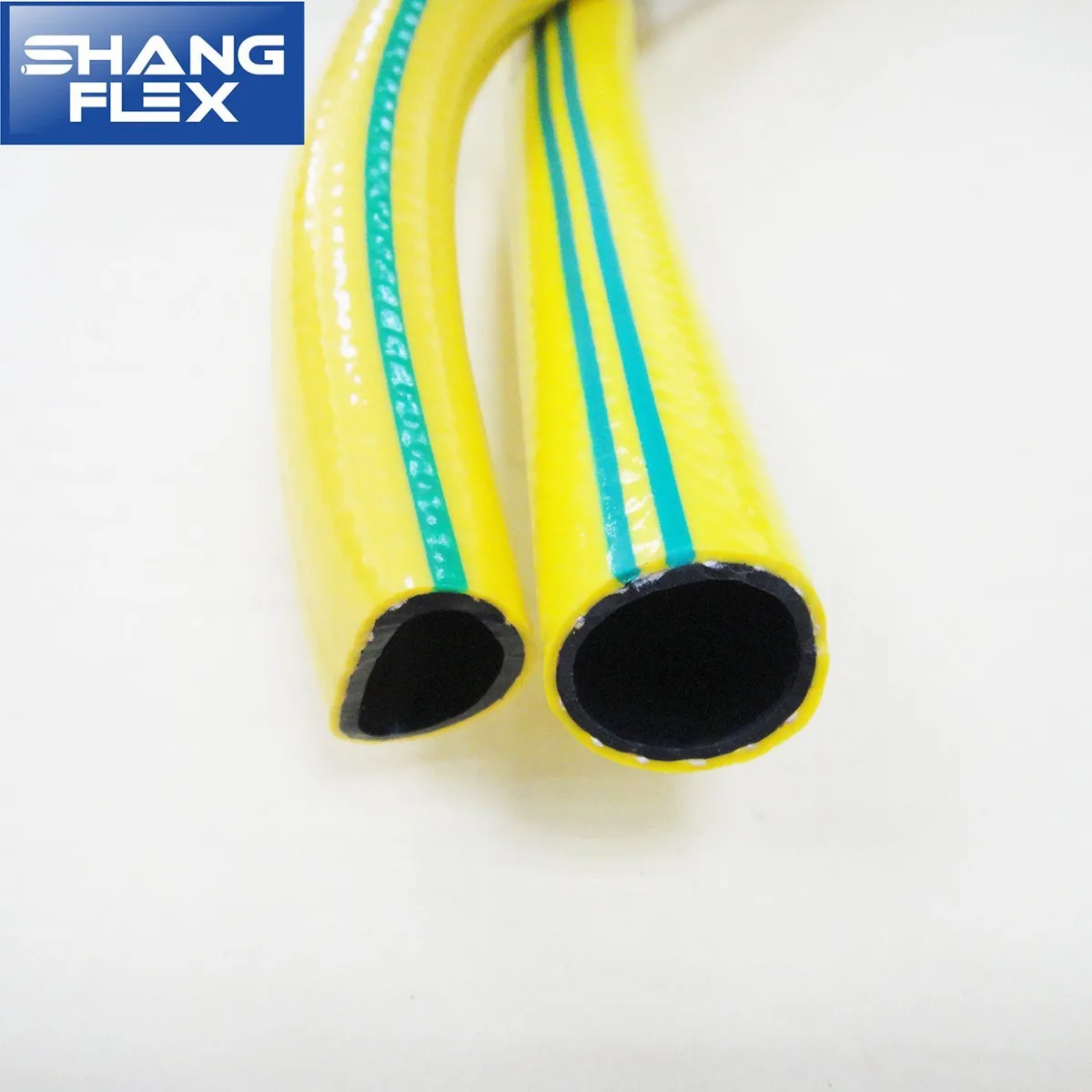
Image source: Bing (Web (fair-use with source credit))
Standard garden hoses carry their reinforcement around the outside or not at all. The outer layer protects against abrasion, UV exposure, and kinking from bending. But it does almost nothing to resist inward buckling.
When you place a standard hose on the pump inlet, you're asking a component built for discharge duty to handle suction loading. That mismatch is the root cause of most collapses.
Here's a practical comparison of what you'll find on the market:
| Hose Type | Reinforcement | Suction Rated | Typical Use |
|---|---|---|---|
| Vinyl garden hose | None or fabric lay | No | Watering, light discharge |
| Rubber garden hose | Fabric weave | Rarely | Outdoor use, moderate duty |
| Suction/discharge hose | Steel or PVC spiral | Yes | Pump transfer, sump removal |
| Lay-flat hose | None, flat when dry | No | Low-pressure discharge only |
Wall thickness matters alongside reinforcement. A 3⁄4-inch hose offers more internal space than a 1⁄2-inch version. More space means slower flow velocity for the same pump output.
Slower velocity means less pressure drop and a lower chance of collapse. You'll also want to check the hose's negative pressure rating before buying. Reputable suppliers list this clearly in product specs.
If you're working with a high-GPM transfer pump, don't pair it with a thin garden hose. It's tempting because the hose is cheap and already on hand. But replacing a collapsed hose mid-job costs more time and money than buying the right one upfront.
See our size guide for garden hoses to pick the right diameter for your pump setup.
Setting Up Your Pump and Hose to Avoid Collapse
How do you position everything so the hose stays open and flow stays steady? The single most effective move is creating flooded suction. That means placing the pump below the water surface so water naturally flows into the pump inlet by gravity.
No vacuum is required. The hose never sees negative pressure because it's always full and pressurized from the weight of the water above it.
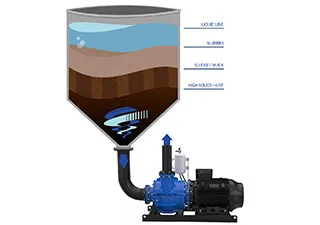
Image source: Bing (Web (fair-use with source credit))
When flooded suction isn't possible, you're working with suction lift instead. The pump must pull water up to its inlet. Here, every foot of vertical lift reduces the maximum theoretical flow you can achieve.
At sea level, a centrifugal pump can theoretically lift water about 34 feet. Real-world limits sit closer to 20 to 25 feet because of friction losses and seal limitations. That's a hard constraint set by physics, not pump quality.
Follow these steps to minimize collapse risk during a lift-suction setup:
- Prime the hose fully before starting the pump. Fill it with water and cap the end so air can't escape. A primed hose leaves no empty space for vacuum to expand into.
- Use a suction-rated hose with spiral reinforcement. Do not substitute a standard garden hose on the intake side.
- Keep the intake line as short and straight as possible. Every elbow and foot of length adds friction loss, which deepens the pressure drop.
- Seal all connections tightly. Air leaking past a loose coupling enters the vacuum zone and can trigger cavitation.
- Position the hose bed flat without sharp bends. A kinked section creates a localized restriction that worsens the pressure drop downstream.
When your pump runs, listen for a smooth, consistent sound. Erratic chugging or loud gurgling usually means air is entering the system or the hose is partially collapsing. Catch those signs early.
See how to connect your pump hose securely before you start the job.
For tasks like draining a pool, always route the suction line through a reinforced hose and keep the pump as low as safely possible. The difference between a quick empty and a frustrating half-empty job often comes down to setup geometry.
Common Mistakes That Lead to Collapse
What are the most frequent setup errors that cause hoses to buckle? The biggest one is putting a standard garden hose on the pump intake and expecting it to hold shape. Manufacturers design these hoses for outbound pressure, not inbound vacuum.
The material can flex under positive pressure without issue. The same flex becomes fatal under negative pressure.
Another common mistake is using a hose with an internal diameter that's too small for the pump's flow rate. A pump rated at 400 GPM paired with a 1⁄2-inch hose forces water through a tight passage. Velocity climbs.
Pressure plummets. The hose collapses before the pump can reach its rated output. Pair that pump with a 3⁄4-inch or 1-inch suction hose instead and you'll see dramatically better flow.
People also mistake a kink for a collapse, then waste time troubleshooting the wrong problem. A kink is a sharp bend that blocks flow locally. A collapse is a sustained inward buckling of the hose wall over a longer section.
Both stop flow. Both can damage a pump if ignored. But they require different fixes.
A kinked hose just needs repositioning. A collapsed hose needs replacement or reinforcement.
Air leaks at fittings create a third major cause. When a connection isn't sealed perfectly, atmospheric air gets drawn into the low-pressure zone. The incoming air breaks the prime, causes the pump to cycle, and can accelerate hose degradation.
Over time, repeated vacuum cycling weakens the hose material and makes future collapses more likely.
A fourth error is ignoring the hose's temperature rating. Cold weather stiffens vinyl and makes it far more prone to cracking under suction stress. If you're pumping from a cold pond or tank in late fall, switch to a rubber suction hose rated for low temperatures.
To stop your hose from kinking, choose a kink-resistant design and avoid tight bends that exceed the hose's minimum bend radius.
A fifth mistake is running the pump dry after a collapse event. Once the hose seals shut, the pump continues spinning against air. That generates heat, wears seals, and can warp the impeller.
Always shut the pump off the moment you notice flow dropping or a collapse forming.
How to Pick the Right Suction Hose
Which hose characteristics actually matter for pump intake use? Reinforcement type tops the list. An internally coiled PVC or steel wire spiral is non-negotiable for any serious suction application.
That coil acts as a permanent internal brace. Even at near-zero internal pressure, the spiral keeps the bore round.
Next comes diameter. Larger ID reduces flow velocity for any given pump output. Velocity is the variable that drives pressure drop through Bernoulli's principle.
A 5⁄8-inch hose handles modest flow. A 3⁄4-inch or 1-inch hose handles high-GPM transfer pumps comfortably. Choose based on your pump's maximum GPM rating, not your hose's highest PSI rating.
Wall thickness follows diameter. Thicker walls resist abrasion and add marginal crush resistance, but they cannot replace internal spiral reinforcement. A thick-walled plain vinyl hose still collapses under strong suction.
Look for hoses labeled specifically as suction hose or transfer hose, not just heavy-duty garden hose.
Flexibility matters for storage and routing but shouldn't come at the cost of structural integrity. Some kink-resistant hoses sacrifice a bit of crush resistance for easier handling. Test the hose by sucking on one end if possible.
If it closes under moderate suction from your mouth, it won't survive a pump.
Price is the final consideration. A quality suction hose costs two to four times a standard garden hose. But it lasts longer, performs reliably, and prevents pump damage.
Factor in the cost of a damaged centrifugal pump seal and the suction hose pays for itself after one job.
Troubleshooting a Collapsed Hose
What should you do when your hose has already buckled shut? First, shut off the pump immediately. Running it in a collapsed state creates cavitation and risks seal damage.
Leave the pump off for a minute to let any trapped pressure equalize. Then carefully inspect the collapsed section.
Check whether the hose is permanently deformed. Gently flex the affected area by hand. If the wall springs back to round, the hose may still be usable.
If it stays flattened or shows cracks along the buckle line, replace it. Permanent deformation weakens the structure and makes future collapse far more likely at that same spot.
To recover flow from a just-collapsed hose, you can sometimes restore it manually. Clamp the pump side of the hose to block air ingress. Detach the intake end and submerge it underwater in your source.
Pour water into the open end until the hose fills completely. Reattach quickly while the hose is still full. This restores prime and often uncollapses the hose without damage.
If the collapse happened deep inside the run, cut out the damaged section and join the remaining halves with a barbed coupling and hose clamps. A simple 2-inch brass or PVC barbed connector works for most 5⁄8-inch and 3⁄4-inch hoses. See our guide on how to connect two garden hoses together for the proper clamping technique.
After any collapse event, check the pump for air leakage signs. Inspect the inlet seal and impeller housing for scoring or wear. A pump that has cycled through air during collapse may show reduced prime retention on subsequent starts.
If the pump loses prime quickly even with a new hose, the internal seals may need replacement.
What Happens If You Ignore the Problem
Can a collapsed hose cause real damage beyond lost flow? Yes. Prolonged collapse forces the pump to run against air instead of water.
Centrifugal pumps rely on water for both lubrication and cooling of their mechanical seals. Air flow generates heat that water normally dissipates. Running dry for even a few minutes can crack seal faces and warp impeller components.
Cavitation is another silent killer. When the pressure inside the hose drops below the vapor pressure of water, tiny steam bubbles form and then collapse violently as they enter the impeller. Those micro-explosions erode metal over time.
Repeated cavitation events leave pitting marks on the impeller and volute casing. The damage is gradual but irreversible.
A collapsed hose also wastes fuel or electricity. The pump motor draws roughly the same current whether it's moving water or churning air. You're burning energy for zero useful output.
In a battery-powered or generator-driven setup, that wasted energy translates directly into shorter runtime when you need it most.
Finally, a partially collapsed hose changes your flow dynamics unpredictably. The restriction varies as the pump vibrates and the hose flexes. Flow rate becomes erratic.
For applications like pool draining or irrigation transfer, that inconsistency slows the entire job and can leave you straddling a half-empty tank at dusk. Prevention is always cheaper than troubleshooting.
FAQs
Can a submersible pump cause hose collapse?
No. A submersible pump pushes water from below the surface. It creates positive pressure on the discharge side, not negative pressure on an intake.
The hose on a submersible setup is under outward pressure, which strengthens the wall rather than crushing it. Collapse is essentially impossible with a properly sized discharge hose on a submersible pump.
Does hose length affect collapse risk?
Yes, longer hoses increase risk. Each additional foot of hose adds friction loss to the suction side. Friction loss deepens the pressure drop along the entire run.
A 50-foot suction line experiences significantly more total pressure loss than a 15-foot line at the same flow rate. Keep suction lines as short as your setup allows.
How do I know if my hose is damaged beyond repair?
Look for three signs: permanent flattening that doesn't spring back, visible cracks or splits along the buckle line, and a soft or spongy feel in the deformed section. If any of those are present, the structural integrity is compromised. Replace the hose rather than risk another collapse mid-job.
What's the difference between a kink and a full collapse?
A kink is a sharp bend that pinches the hose at one point. It blocks flow locally and is usually caused by the hose being stepped on or bent too tightly. A full collapse is a sustained inward buckling of the hose wall over a longer section, caused by vacuum pressure exceeding wall stiffness.
A kink fixes itself when you straighten the bend. A collapse requires a change in hose type or setup.
Can I use a hose clamp to prevent collapse?
No. Clamping the outside of a hose doesn't reinforce the wall against inward pressure. It only restricts the diameter further, which increases velocity and drops pressure more.
External reinforcement requires an internal spiral or a rigid liner, not a clamp. A hose clamp is useful for preventing leaks at connections, not for stopping collapse.
Does water temperature affect collapse risk?
It does, slightly. Cold water is more viscous than warm water, which marginally increases friction loss in the hose. More importantly, cold temperatures stiffen vinyl and rubber materials.
A hose that flexes easily at 70 degrees Fahrenheit may become brittle and less resilient at 35 degrees. In cold conditions, use a hose rated for low-temperature service.
Is a wider hose always better for suction?
Not always. A larger diameter reduces velocity and pressure drop, which helps prevent collapse. But a 1-inch hose on a low-output pump creates unnecessary friction in the pump's own volute and can reduce overall efficiency.
Match the hose diameter to your pump's rated flow range. A 5⁄8-inch or 3⁄4-inch reinforced suction hose covers most residential transfer pump applications.
This guide covers the core mechanics, prevention strategies, and troubleshooting steps for hose collapse. The key takeaway is simple: never place an unreinforced garden hose on the suction side of a pump. Use a reinforced suction hose, set up for flooded suction when possible, and keep your intake line short and sealed.
That combination eliminates collapse risk in virtually every common use case.
Common Mistakes That Lead to Collapse
What mistakes cause collapse most often? Using a standard garden hose on the pump intake tops the list. These hoses lack spiral reinforcement and buckle under suction.
Another frequent error is ignoring hose diameter relative to pump output. A high-GPM pump paired with a narrow hose forces water through too small a passage, deepening the pressure drop.
Air leaks at fittings create a third common problem. When connections aren't sealed, air enters the vacuum zone and breaks the pump's prime. This causes erratic flow and cycling that worsens collapse risk over time.
People also skip priming the hose before startup, which leaves air pockets that the pump chews through instead of moving water.
Running the pump dry after noticing a collapse compounds the damage. The impeller spins against air, generating heat that damages seals. Always shut off the pump immediately when flow drops or the hose begins to buckle.
See how to repair a garden hose if you catch a minor issue early enough.
Troubleshooting a Collapsed Hose
How do you fix a hose that has already buckled shut? Start by shutting off the pump and relieving any trapped pressure. Inspect the collapsed section for permanent deformation.
If the wall springs back when you flex it by hand, the hose may still work. Cracks or flattened spots that won't recover mean replacement is necessary.
To restore a just-collapsed hose, submerge the intake end in water and pour water into the open end until the line fills completely. Reattach quickly while the hose stays full. This restores prime and often uncollapses the bore without damage.
If the collapse happened mid-run, cut out the damaged section and join the remaining hose with a barbed coupling and clamps.
Check the pump after any collapse event. Inspect the inlet seal for scoring and the impeller for wear. A pump that cycled through air during collapse may lose prime faster on subsequent starts.
If that happens, replace the mechanical seal before running again. Knowing how to increase water pressure from your garden hose can also help you diagnose flow restrictions that contribute to suction problems.
Frequently Asked Questions
Can a submersible pump cause hose collapse?
No. Submersible pumps push water from below the surface, creating positive pressure on the discharge side. The connected hose experiences outward force, which strengthens the walls rather than crushing them.
Collapse only occurs on suction-side setups where negative pressure develops.
Does hose length affect collapse risk?
Longer hoses increase friction loss along the suction line. More friction means a deeper pressure drop from the pump to the water source. Keep the intake run as short and straight as your job allows.
Every extra foot adds to the vacuum load on the hose wall.
How do I know if my hose is damaged beyond repair?
Look for permanent flattening, cracks along the buckle line, or a soft spongy feel in the deformed section. Any of these signs means the structural integrity is compromised. Replace the hose rather than risk another collapse mid-job.
What's the difference between a kink and a full collapse?
A kink is a sharp bend that blocks flow at one point. It usually comes from the hose being stepped on or bent too tightly. A collapse is sustained inward buckling caused by vacuum pressure exceeding wall stiffness.
Straighten a kink. Replace or reinforce a collapsed section.
Is a wider hose always better for suction?
Not always. Larger diameter reduces velocity and pressure drop, which helps prevent collapse. But oversizing a hose on a low-output pump can reduce efficiency inside the pump volute.
Match the hose ID to your pump's rated flow range rather than assuming bigger is always better.

Similar Posts